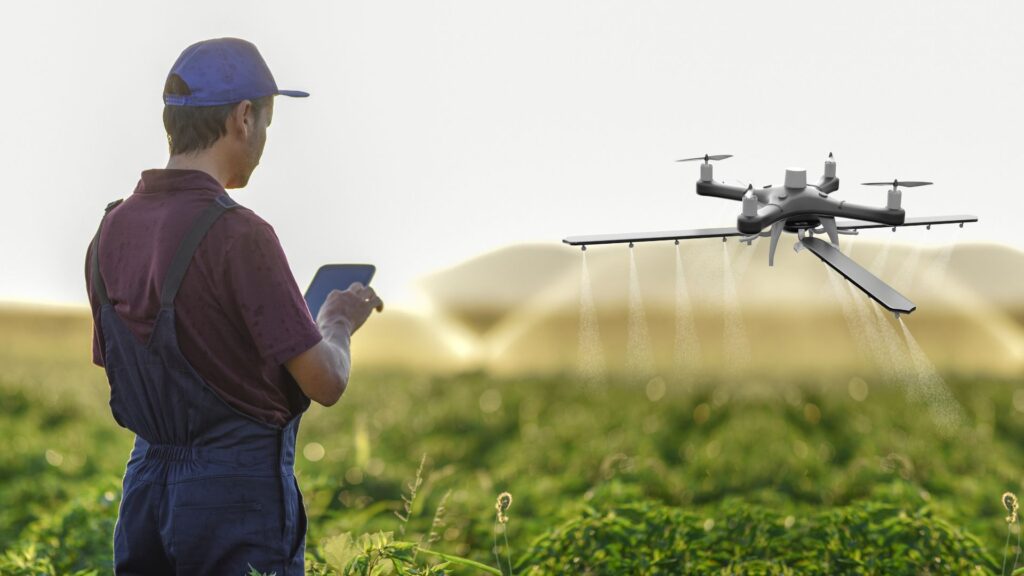
The AgTech Leadership Crisis Explained
Why Agricultural Technology Companies Need Leaders Who Understand Both Farming and Digital Innovation
Agricultural technology has entered a transformative era – but despite billions flowing into AgTech innovation globally, the biggest barrier to growth is increasingly not the technology itself. It is leadership.
While technology is advancing at unprecedented speed, leadership structures across much of the agricultural sector remain rooted in traditional operating models. The result is a growing disconnect between innovation potential and organisational execution.
Boards, investors, and founders are increasingly discovering that the biggest barrier to growth is no longer technology itself. It is finding executive leaders capable of navigating both the realities of agriculture and the demands of digital transformation.
AgTech Is Evolving Faster Than Leadership Teams
The agricultural sector has historically rewarded operational expertise, industry relationships, and deep knowledge of farming systems. Those capabilities remain essential.
However, today’s AgTech businesses operate in a vastly different environment. Leaders are now expected to understand AI-driven decision-making, software platforms, data ecosystems, automation technologies, climate-smart agriculture, and increasingly complex investor expectations.
According to the World Economic Forum, emerging technologies such as artificial intelligence, robotics, computer vision, and automation are fundamentally reshaping agricultural roles, requiring new levels of digital and data literacy throughout the sector.
The challenge is that many executive teams built their careers in a pre-digital agricultural landscape. While highly experienced in traditional farming or agribusiness operations, they may lack the technical understanding required to scale technology-led businesses.
This leadership gap often manifests in several ways:
- Slower technology adoption
- Difficulty attracting digital talent
- Misalignment between product development and market needs
- Ineffective scaling strategies
- Challenges securing investor confidence
As innovation cycles shorten, organisations led by executives unable to adapt quickly risk falling behind more agile competitors.
The Rise of the Hybrid AgTech Leader
The most successful AgTech companies increasingly share a common characteristic: leadership teams that combine agricultural expertise with technology fluency.
These leaders understand the operational realities of farming while also recognising how data, automation, AI, and software can create commercial advantage.
They can speak credibly to farmers, investors, engineers, and product teams alike.
This hybrid capability is becoming increasingly valuable because agricultural innovation does not follow the same patterns as traditional software sectors.
Recent research published in Food Policy highlights that AgTech innovation cycles are often constrained by biological realities, regional differences, and slower adoption rates, creating unique challenges that conventional venture capital models frequently struggle to accommodate.
Leaders must therefore balance patience with innovation. They need to understand how to commercialise technology in industries where trust, seasonal cycles, and long-term relationships remain critical success factors.
Why Investors Are Paying Closer Attention to Leadership
Investor scrutiny of executive leadership has intensified significantly in recent years.
Funding environments have become more selective, and investors increasingly recognise that execution risk often outweighs technological risk.
A promising technology platform can still fail if leadership lacks the experience to scale operations, build commercial partnerships, and navigate industry complexity.
Recent market data shows that AgTech funding has experienced considerable volatility, placing additional pressure on management teams to demonstrate clear pathways to growth and profitability.
As a result, boards are placing greater emphasis on leadership assessment during fundraising, succession planning, and growth-stage hiring.
The question is no longer simply, “Does this executive understand agriculture?”
It is increasingly, “Can this executive lead a technology-driven agricultural business through rapid change?”
The Talent Pool Is Smaller Than Many Organisations Realise
One of the greatest challenges facing AgTech companies is that genuinely qualified leadership candidates remain exceptionally scarce.
The ideal executive often possesses:
- Deep agricultural or agribusiness experience
- Technology commercialisation expertise
- Experience managing innovation-driven growth
- Investor and board engagement capabilities
- Understanding of digital transformation
- Strong change-management skills
Very few professionals develop all these competencies within a single career.
This creates intense competition for talent, particularly among high-growth AgTech businesses, venture-backed organisations, and established agricultural companies pursuing digital transformation.
The demand for leaders who can bridge both worlds now significantly exceeds supply.
Why Specialist Executive Search Matters More Than Ever
Traditional recruitment approaches frequently struggle to identify these hybrid candidates.
Many executive recruiters have strong networks within agriculture but limited exposure to technology leadership. Others understand technology talent but lack the industry-specific knowledge required to assess agricultural expertise.
This is where specialist executive search firms like Skills Alliance Executive play a critical role.
By operating at the intersection of agriculture, technology, and executive leadership, specialist search partners can access talent pools that conventional recruitment methods often overlook.
They understand the nuances of both sectors, enabling them to evaluate not only technical competence and leadership capability but also cultural fit and long-term growth potential.
Most importantly, they can identify executives who may not be actively seeking new opportunities but possess the rare blend of skills modern AgTech businesses require.
The Future of AgTech Depends on Leadership
The next decade will likely define the future of agriculture.
From AI-powered farm management systems to autonomous machinery and climate-resilient production models, innovation will continue accelerating.
Yet technology alone will not determine which companies succeed.
The organisations that thrive will be those led by executives capable of translating innovation into commercial impact. Leaders who understand both the field and the future.
For boards, investors, and founders, identifying that talent is rapidly becoming one of the most important strategic decisions they will make.


