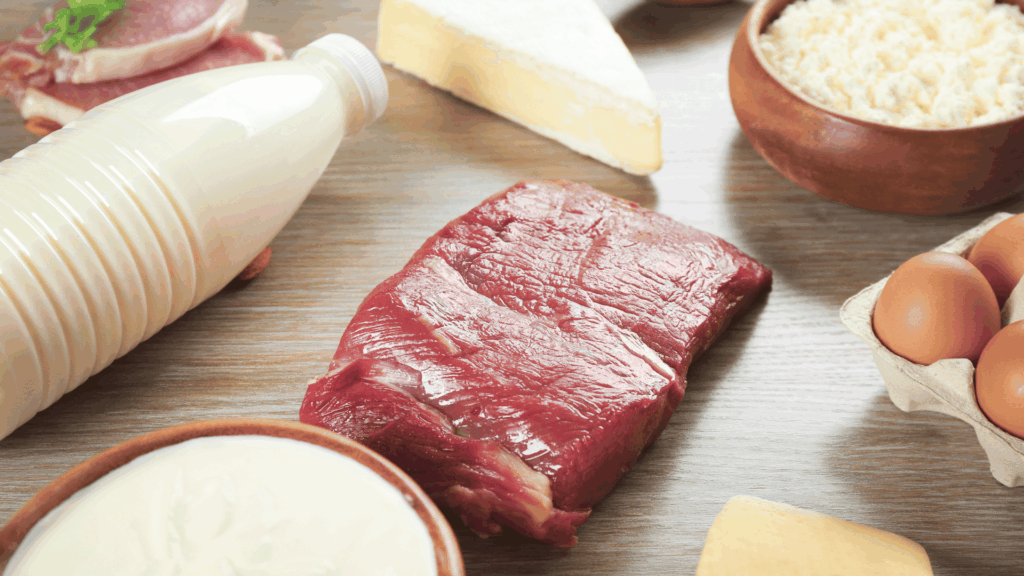
Wisconsin Meat and Dairy Staffing Gap
Wisconsin’s Meat and Dairy Plants Are Expanding Fast, But Who Will Staff Them?
Wisconsin’s meat and dairy sector is in the middle of a capital surge. New cheese plants and expanded whey facilities are going up across the state. Private equity money and co-operative reinvestment are both driving it. For plant managers, that investment should feel like good news. In practice, however, it creates a harder problem. Who is going to run what gets built?
Capital Is Flowing Into Wisconsin’s Food Plants
The scale of investment in dairy processing is hard to overstate. Processors are not simply patching up old lines. Instead, they are placing bets worth hundreds of millions of dollars on where milk supply will grow next. Wisconsin and California together produced almost a third of the nation’s milk in 2025, according to Farm Progress.
Corey Geiger, lead dairy economist at CoBank, told Farm Progress that processors want a secure milk supply before they commit. For example, a cheese plant can cost upward of one hundred million dollars. A whey facility can push close to a billion. In fact, Iowa alone has more than seven hundred million dollars in new dairy plant investment planned over the next two years. That pattern is repeating right across the Midwest, and Wisconsin sits in the middle of it.
This is the part of the story that gets the headlines. New lines mean new capacity and new contracts for the firms who build and commission them. It is also, quietly, the easy part. The harder part starts once the concrete is poured and the equipment arrives.
Meat processors are seeing a similar pattern. Protein and prepared foods remain some of the most active categories for private equity investment nationally. Wisconsin’s meat plants sit inside that trend just as much as its cheese and whey facilities do. New lines, new shifts and new food safety requirements all land on the same operations teams at once. Often, they land on the same commissioning schedule too.
The Workforce Has Not Kept Pace
The people needed to run these new lines are harder to find than the money to build them. Notably, Wisconsin processing plants have already cut back operating hours simply because they could not staff them fully, according to Wisconsin Public Radio. This is not a future risk. It is happening on plant floors now, at the same time as new facilities nearby are still being commissioned.
Leonard Polzin, a dairy markets specialist at the University of Wisconsin-Madison, has said most processors run constant recruitment campaigns. Meanwhile, they also compete with other employers for the same local workers. Some are turning to automation to cut headcount needs. However, automation still needs skilled technicians to install, run and maintain it, so the labour problem rarely disappears, it simply moves.
This problem is not unique to Wisconsin, but it is especially sharp here. The state built its reputation on dairy volume. Now, the workforce behind that volume is ageing, just as capacity expands fast. Besides an ageing workforce, record-low unemployment across the state means there is no reserve of idle workers waiting to be hired. As a result, every new plant is effectively competing with every existing one for the same small pool of skilled people.
Contract Staffing Bridges the Gap
Contract staffing solves a timing problem as much as a numbers problem. A new production line does not need its full permanent team on day one. Instead, it needs skilled operators, maintenance technicians and quality staff in place fast, ready for a commissioning deadline. That team can then scale once the line proves itself.
This is where contract recruitment earns its place in a project plan. First, you can bring in a team of operators and technicians for a defined ramp-up period. In doing so, you avoid the long-term cost of that many new permanent payroll lines. If volumes hold, you then convert the roles that make sense into permanent jobs. If demand shifts instead, you are not left carrying headcount you cannot justify.
Contract talent also protects the capital case itself. Put simply, a stalled line because of unfilled roles costs far more than the fee to staff it properly. Meat and dairy processors moving fast on expansion need a partner who understands food manufacturing, food safety standards and plant shift patterns. Generalist staffing that treats a cheese plant like a warehouse will not deliver that, and it often costs more in the long run through slow starts and poor retention.
Likewise, timing matters as much as skill. A commissioning date does not move just because recruitment is running behind, and a half-staffed line still carries its full cost. Skills Alliance Staffing works with meat and dairy manufacturers across the Midwest to close this exact gap between investment and delivery. Our consultants know the roles, the shift patterns and the food safety standards that come with a working plant floor. That means your project team is ready before the equipment is.
If your Wisconsin site has a project timeline tighter than your current headcount plan, get in touch. Let us talk through your next line, your next ramp-up or your next commissioning deadline.
By George Howard, Recruitment Consultant, Skills Alliance


